




About the AI Studio
The DAF-Stanford AI Studio exists to shape research, requirements, and realization to scale AI and autonomy within the Department of the Air Force.
We operate at the intersection of Silicon Valley's innovation ecosystem and Air Force operational reality. We're not a think tank. We're not a program office. We're not an academic lab. We're the technical connective tissue that turns hard problems into fielded capability, functioning as a unified partnership between officers and researchers.
Studio Engine
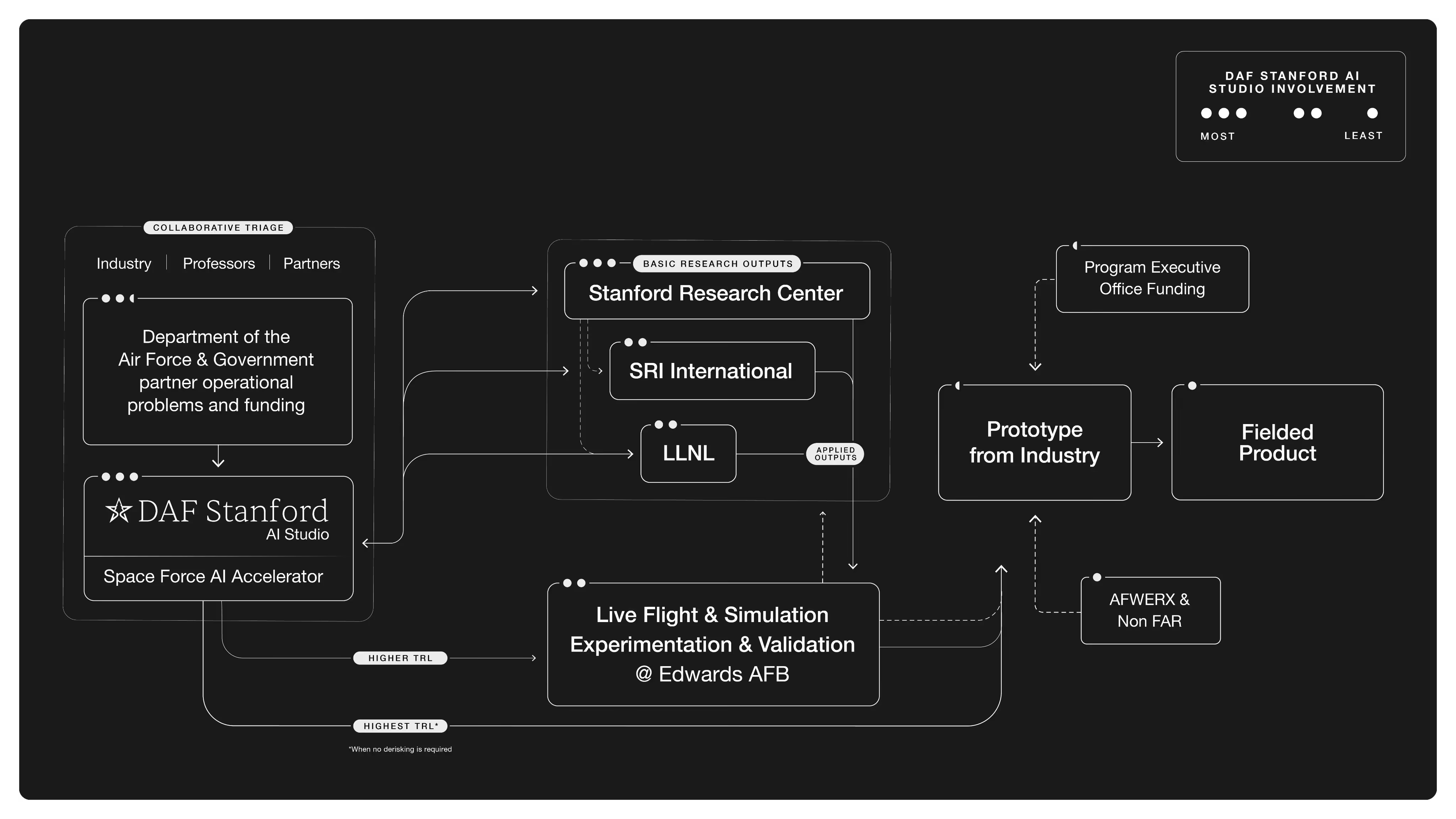
The AI Studio is a capability engine that identifies and defines problems and then connects those problems to solutions in academia, national labs, and industry. The goal of each project is to field capability via any means available and then obsolete that solution as quickly as possible.
Meet the Team
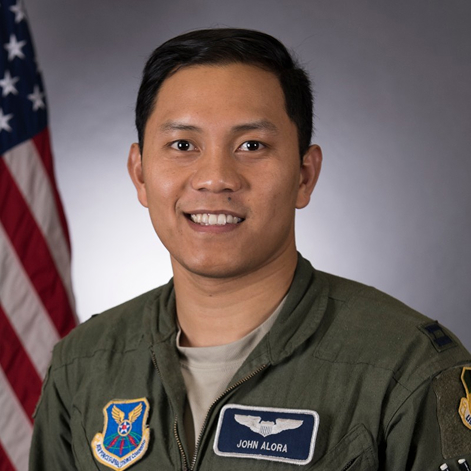
Lieutenant Colonel John “Heater” Alora
Director of Operations, DAF-Stanford AI Studio
Lieutenant Colonel John Irvin “Heater" Alora is a research pilot, roboticist, and aerospace engineer leading AI and autonomy efforts at the intersection of test, operations, and academia. He serves as Director of Operations for the AI Studio, Assistant Dean of Research at the USAF Test Pilot School, and is a Visiting Scholar in Stanford's Department of Aeronautics and Astronautics. Prior to his current role, John served as a B-52 aircraft commander and weapons and tactics officer, leading bomber task force missions across CENTCOM, EUCOM, AFRICOM, and INDOPACOM. He accumulated over 300 combat hours flying armed overwatch in support of Operation Freedom Sentinel, Operation Spartan Shield, and the Resolution Support mission.
John holds a Doctor of Philosophy in Aeronautics and Astronautics from Stanford University, under the supervision of Prof. Marco Pavone, where he developed physics-based ML techniques for controlling infinite-dimensional systems, with applications to soft robots and autonomous aircraft. He earned a Master of Science in Aeronautics and Astronautics from MIT as a Draper Fellow under Prof. Sertac Karaman. John graduated from the U.S. Air Force Academy as a Distinguished Graduate with a Bachelor of Science in Electrical Engineering and minor in Arabic, earning honors for Academic and Athletic Distinction. His research focuses on embedding structure into AI/ML models to enable robust physical AI systems that learn from and adapt to their environment. His current interests include multi-modal reasoning, model compression, and their applications to next-generation aerospace systems.
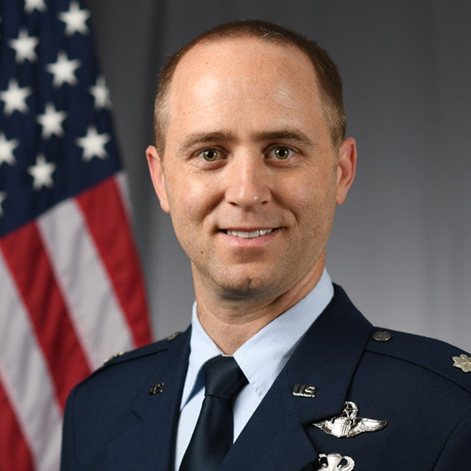
Colonel Jason Hansberger
Co-Director, DAF-Stanford AI Studio
Prior to his role as the Founding Director of the Studio, Colonel Hansberger was a Secretary of Defense Executive Fellow at Autodesk, Inc., and had two assignments at the Pentagon, writing national security strategies and advising the Chief of Staff of the Air Force. He is a command pilot with over 600 combat hours in the C-17 and C-32. In his most recent flying assignment, he was the Squadron Commander of the unit that flies the Vice President of the United States in Air Force 2, as well as cabinet secretaries and senior military officials.
Jason began his career at the Air Force Academy, where he graduated in 2002. In follow-on studies, he earned an MBA and a Master's in International Security Studies from the Naval Postgraduate School, while in Monterey, learning Thai and completing training as a Foreign Affairs Officer. Col Hansberger, his wife Courtney, and their four (soon to be five) children enjoy baseball, softball, mountain biking, and anything that gets them outdoors and connected to the community. Col Hansberger also serves on the Board of Trustees for his children's school, Episcopal Day School of Saint Matthews, and as a member of the board for Hillsborough Little League.
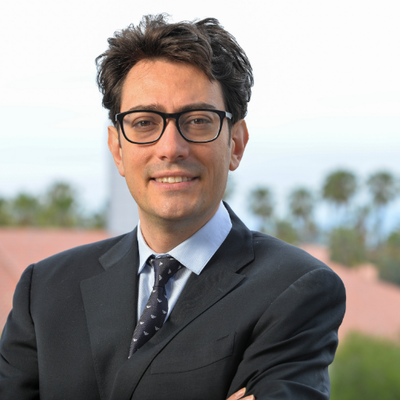
Marco Pavone
Associate Professor of Aeronautics and Astronautics, Stanford University
Dr. Marco Pavone is an Associate Professor of Aeronautics and Astronautics at Stanford University, where he directs the Autonomous Systems Laboratory and the Center for Automotive Research at Stanford. He is also a Distinguished Research Scientist at NVIDIA where he leads autonomous vehicle research. Before joining Stanford, he was a Research Technologist within the Robotics Section at the NASA Jet Propulsion Laboratory. He received a Ph.D. degree in Aeronautics and Astronautics from the Massachusetts Institute of Technology in 2010. His main research interests are in the development of methodologies for the analysis, design, and control of autonomous systems, with an emphasis on self-driving cars, autonomous aerospace vehicles, and future mobility systems.
Dr. Parvone is a recipient of a number of awards, including a Presidential Early Career Award for Scientists and Engineers from President Barack Obama, an Office of Naval Research Young Investigator Award, a National Science Foundation Early Career (CAREER) Award, a NASA Early Career Faculty Award, and an Early-Career Spotlight Award from the Robotics Science and Systems Foundation. He was identified by the American Society for Engineering Education (ASEE) as one of America's 20 most highly promising investigators under the age of 40. His work has been recognized with best paper nominations or awards at a number of venues, including the European Conference on Computer Vision, the IEEE International Conference on Robotics and Automation, the European Control Conference, the IEEE International Conference on Intelligent Transportation Systems, the Field and Service Robotics Conference, the Robotics: Science and Systems Conference, and the INFORMS Annual Meeting.
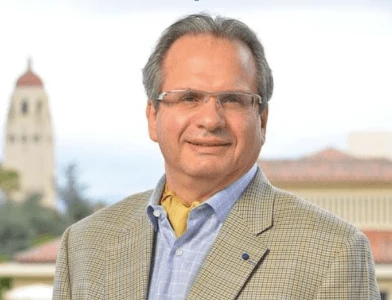
Charbel Farhat
Vivian Church Hoff Professor of Aircraft Structures, Stanford University
Dr. Charbel Farhat is the Vivian Church Hoff Professor of Aircraft Structures at Stanford University, with a joint appointment in the Institute for Computational and Mathematical Engineering. He chaired Stanford's Department of Aeronautics and Astronautics from 2008 to 2023 and directed the Stanford-KACST Center of Excellence for Aeronautics and Astronautics from 2014 to 2024. He previously served as Director of the Army High Performance Computing Research Center at Stanford (2007-2018) and has held advisory roles, including the U.S. Air Force Scientific Advisory Board and the Bureau of Industry and Security's Emerging Technology and Research Advisory Committee. Dr. Farhat holds a Ph.D. in Civil Engineering from UC Berkeley and is a member of three national academies: the U.S. National Academy of Engineering, the Royal Academy of Engineering (UK), and the Lebanese Academy of Sciences. He is a Vannevar Bush Faculty Fellow and holds honorary doctorates from ENS Paris-Saclay, Ecole Centrale de Nantes, and ENSAM. He is a laureate of the 2024 Kuwait Prize in Applied Sciences and a recipient of the TAKREEM AMERICA Foundation Award for Scientific and Technological Achievement.
Dr. Farhat's major honors include the Daniel Guggenheim Medal, the ASME Lifetime Achievement Award and Spirit of St. Louis Medal, the IEEE Gordon Bell Prize and Sidney Fernbach Award, the Gauss-Newton Medal, the John von Neumann Medal from USACM, and the Aurel Stodola Medal from ETH Zurich. He was knighted in the Order of Academic Palms by the Prime Minister of France. Dr. Farhat has authored over 650 refereed publications spanning fluid-structure interaction, computational fluid dynamics, structural mechanics, model order reduction, and physics-based machine learning. He served as Editor-in-Chief of the International Journal for Numerical Methods in Engineering (2014-2024) and the International Journal for Numerical Methods in Fluids (2017-2024). His research has been funded by NSF, AFOSR, ONR, ARL, DARPA, NASA, DoE, and industry leaders including Boeing, Lockheed Martin, and Autodesk.
Our Partners
Explore Technical ThesisAir Mobility Command (AMC)

Partner on AI copilot development, boom operator decision support, and max endurance operations.
Space Systems Command (SSC)
Partner on Space Force AI Accelerator fellowship, Space Domain Awareness, and ground operations autonomy.
Special Operations Command (SOCOM)
Joint partner on multi-domain autonomy, decentralized planning, and maritime F2T2EA kill chains.
Air Force Special Operations Command (AFSOC)
Primary operational partner for autonomous swarm development, GPS-denied navigation, and A2E capability maturation.
USAF Test Pilot School
Embedded partnership with MOA. We provide curriculum, research support, and technical expertise. They provide test resources, operational insight, and access to developmental platforms.
Lawrence Livermore National Laboratory
Advanced computing research and national lab collaboration.
Stanford University
Our academic home. Access to world-class researchers, facilities, and the innovation ecosystem of Silicon Valley.
DoD High Performance Computing (HPC) Center
Compute resources enabling rapid validation of AI models and shaping HPC modernization strategy.
Air Force Research Lab (AFRL)
Collaboration on emerging S&T, compute resources (1.2M GPU hours via HPC), and research transition pathways.
Frequently Asked Questions
What is the DAF-Stanford AI Studio?

We are a specialized hybrid organization of Department of the Air Force (DAF) operators and Stanford University researchers. Our role is to act as a catalyst and connector, taking high-level AI research and grounding it in operational reality to deliver scalable autonomy for the Air Force and Space Force.
Is The AI Studio an official Air Force unit or a Stanford lab
We are a mutual collaboration. While we are staffed by DAF personnel and integrated into the academic ecosystem at Stanford, we operate between the two. This allows us to move faster than traditional military bureaucracies while maintaining a sharper focus on mission-fielding and a direct pipeline to academia than a standard research lab.
How is The AI Studio different from other DoD innovation hubs?
Most innovation hubs focus on procurement (“how to buy”). We focus on “what to build.” We prioritize technical depth over procurement expertise. Our value is measured by Wins Above Replacement (WAR), focusing on complex, technically demanding projects that would not exist without our specific intervention and first-principles analysis.
Do I need to be an expert in government contracting to work with you?
No. In fact, we prefer to filter for technical competence rather than procurement knowledge. If you have a brilliant technical solution, we will help you navigate through the white noise of the contracting process. We want to hear from engineers and researchers, as well as those in need of the technology the former are building!
When is the right time to reach out?
For Operators: When you have a clear operational problem that requires AI or autonomy to scale, but you lack the technical pipeline to build it.
For Academics: When you have interdisciplinary research that needs a demonstrable, high-impact application and a source of mission-aligned funding.
For Industry: When you have a concrete, technically-led pitch that challenges current assumptions or solves a core problem in our three research verticals.
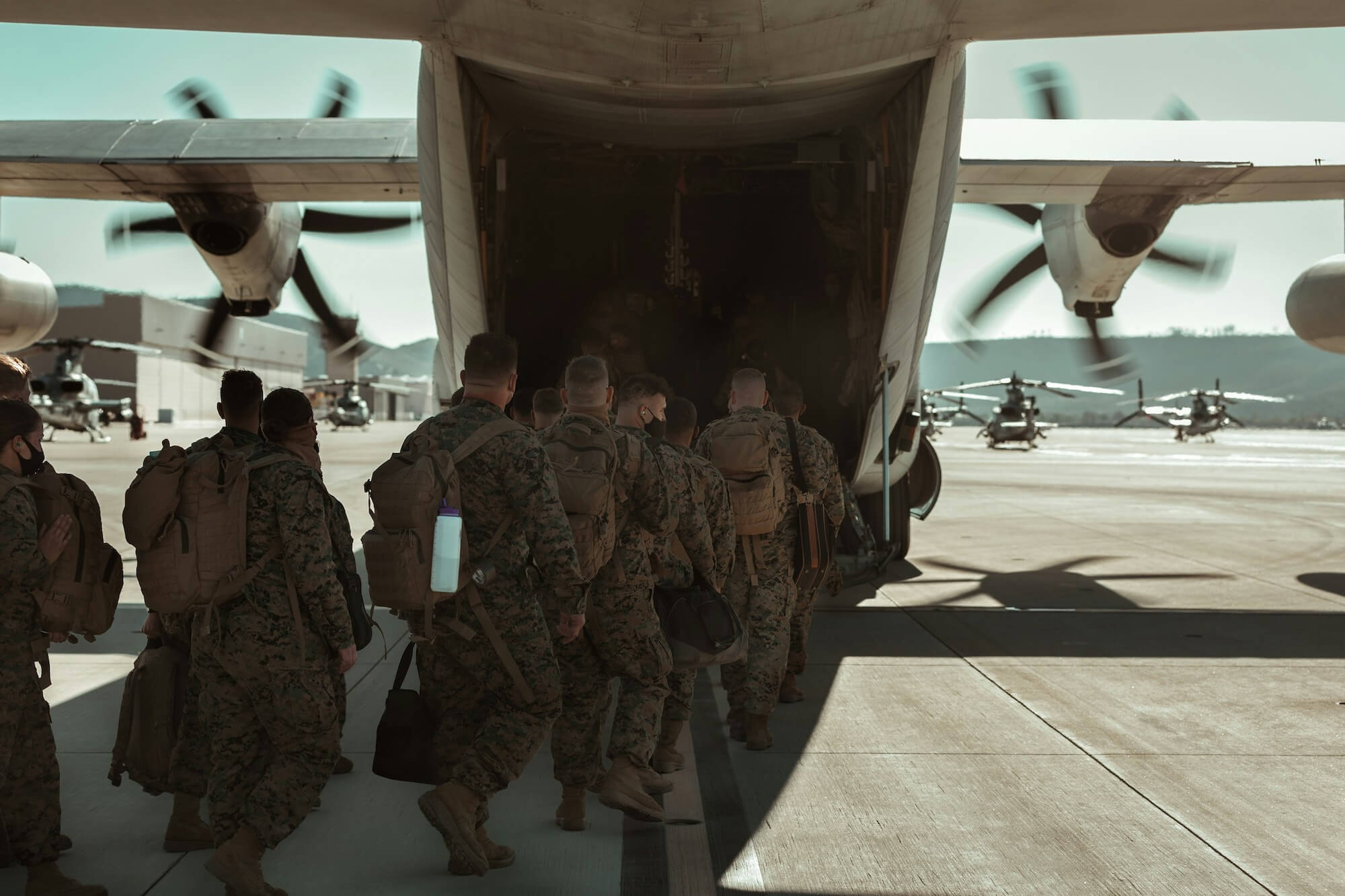
Operators
DAF-Stanford AI Studio exists to solve real operational problems alongside the people facing them. If you are encountering capability gaps at the edge and need autonomy that works under pressure, we are ready to partner with you. Our focus is to turn urgent field needs into deployable systems that directly strengthen the mission.
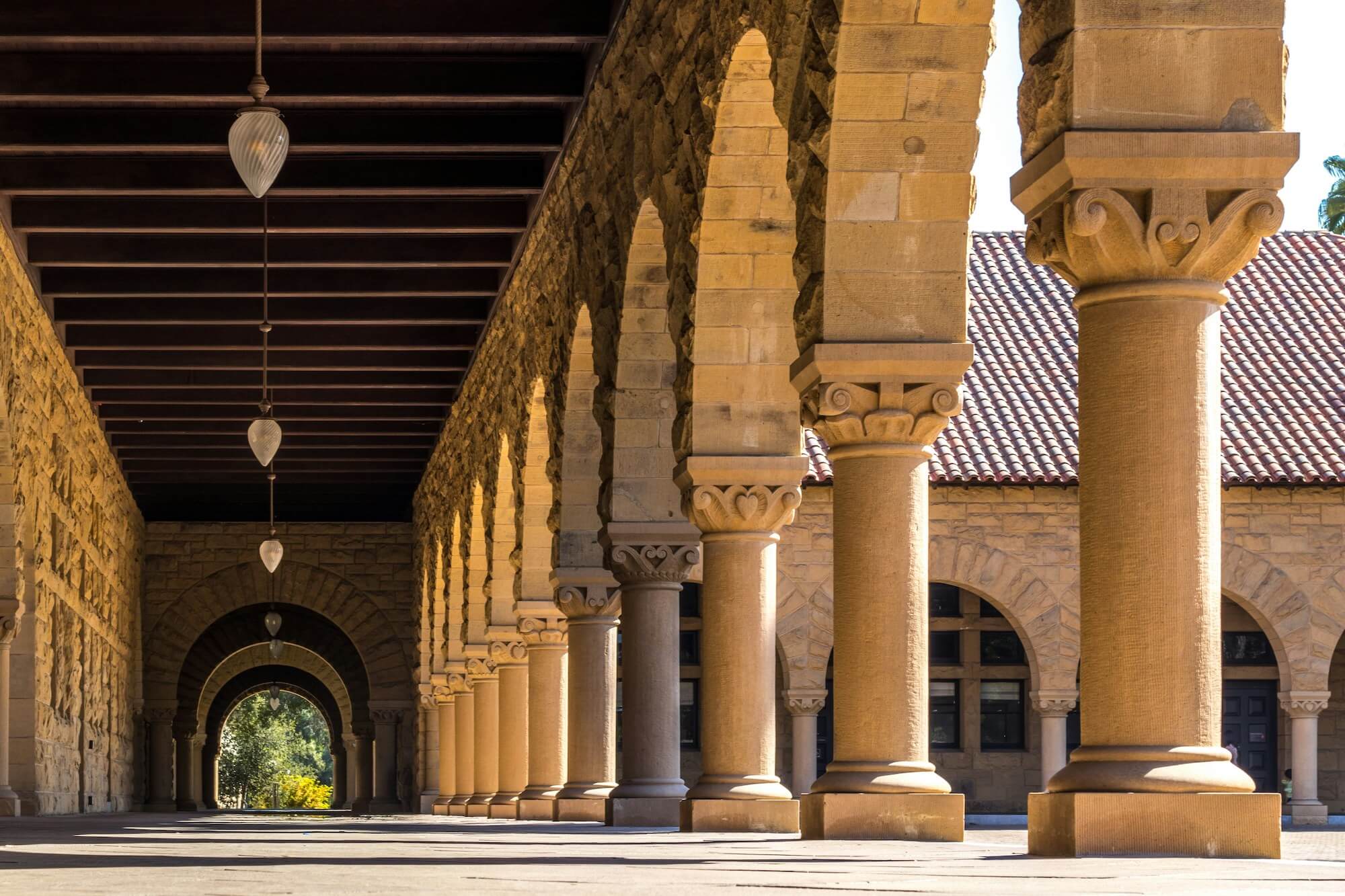
Academia
DAF-Stanford AI Studio exists to translate frontier research into real operational impact. If you are advancing new methods in autonomy, AI, or simulation and want to see that work tested in high-stakes environments, we are ready to collaborate. Our goal is to move promising ideas from the lab into systems that matter.
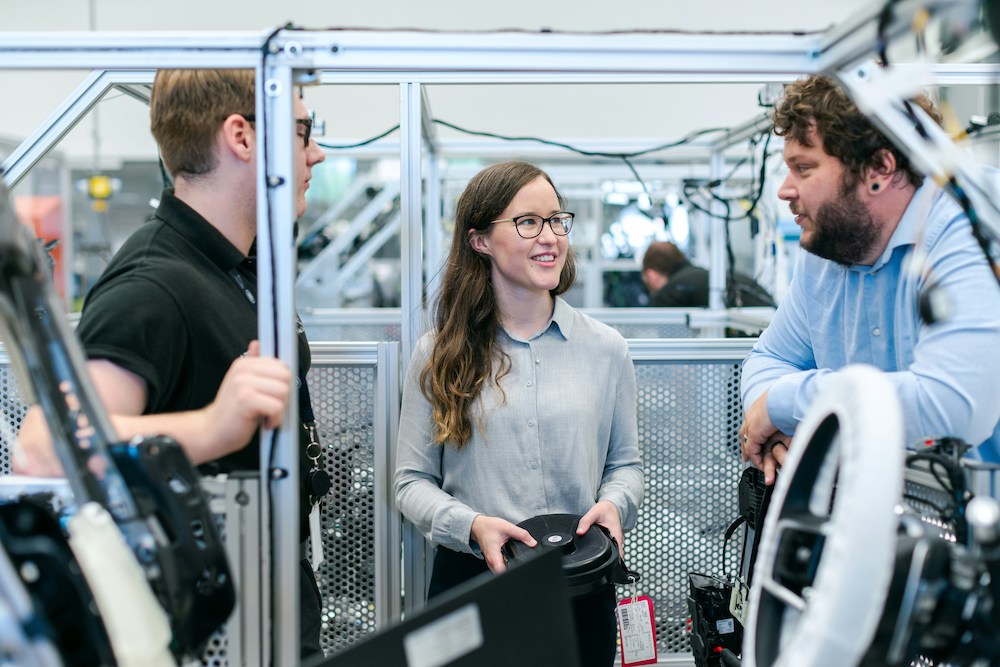
Industry
DAF-Stanford AI Studio exists to build deployable autonomy with people who solve hard technical problems. If you are developing AI systems that must perform under real-world constraints — power limits, contested environments, imperfect data — we are ready to work alongside you and turn that capability into operational systems.