





Technical Thesis
An in-depth study on evolving defense tech life cycles and how DAF-Stanford AI Studio addresses those challenges
In the Compute and AI age, the fastest-moving research and development cycles sit outside traditional defense acquisition—in commercial labs and universities.
The Department of the Air Force must orient the talent and expertise in these communities toward operational problems, building the technological ecosystem needed to prevent strategic surprise.
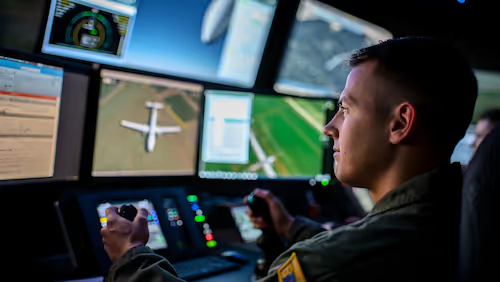
As the character of modern warfare changes, the DAF-Stanford AI Studio has outlined a Problem Space around which the next generation of technologists, academics, and operators must coalesce to solve our nation’s most pressing concerns.
Mapping the Problem Space
The efficient delivery of modern-day solutions starts with properly defining the problem.
Mass
To deliver air power at scale against a peer adversary, the Air Force needs large numbers of attritable, low-cost air vehicles that offset numerical disadvantages.
Autonomy
Mass is made possible by trustworthy autonomous systems that can execute commander's intent without constant human input, even in GPS-denied and communications-degraded conditions.
Compute
Autonomy demands computational efficiency on energy-constrained platforms, without compromising range, payload, or mission effectiveness.
Our Solution
The AI Studio seeks scalable and transferable solutions that deliver air power at scale. This objective dictates our focus: Mass demands autonomy, which in turn demands efficient computing. Our technical verticals define The AI Studio's theory of the case for achieving this goal.
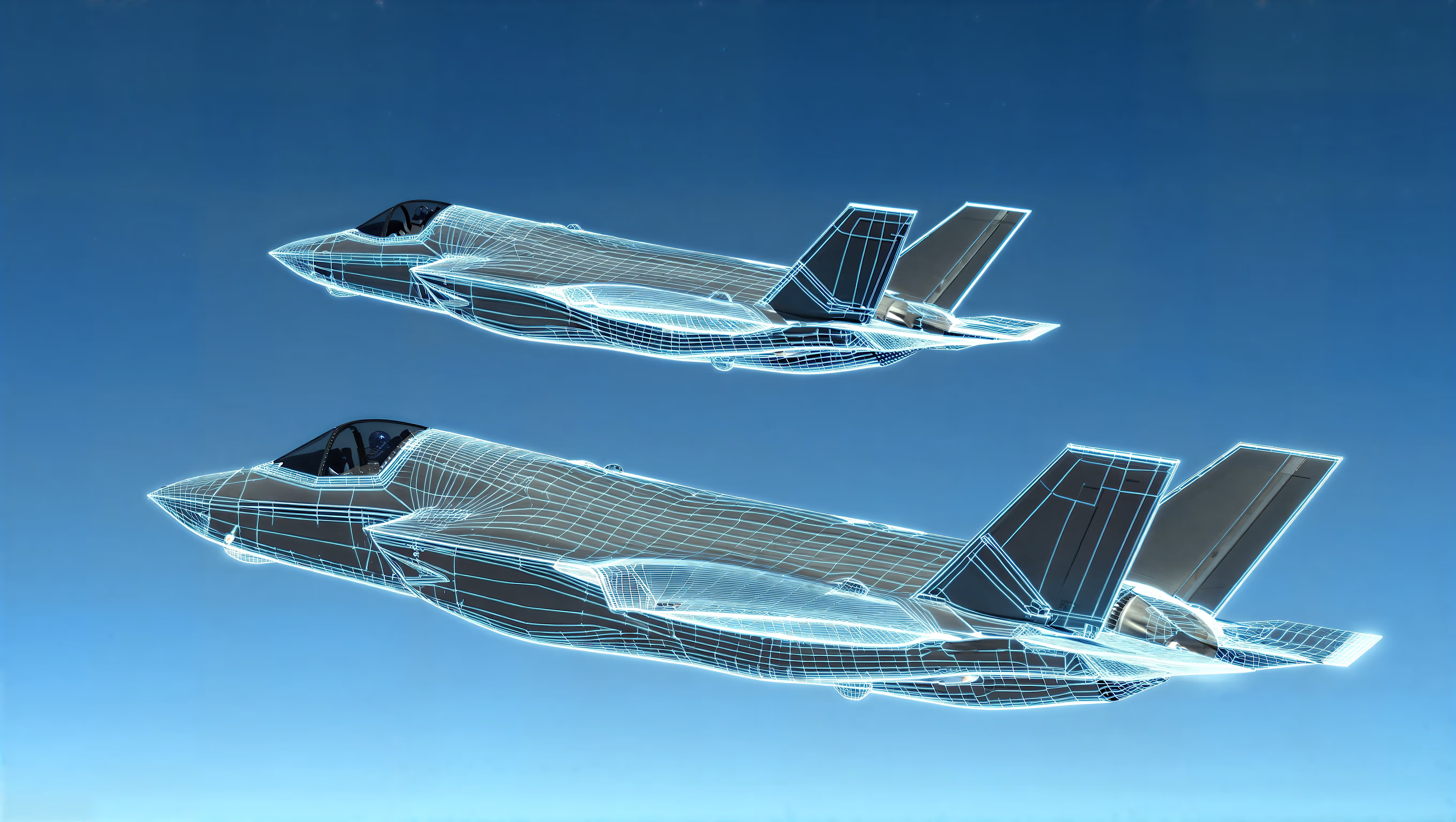
Simulation & Design for Mass
56
Active AI Projects in Development
The Problem
Orthodox design and testing practices are too slow; if the U.S. is to catch up with its near peers, we need to design and validate autonomous air vehicles more quickly at scale.
The Focus
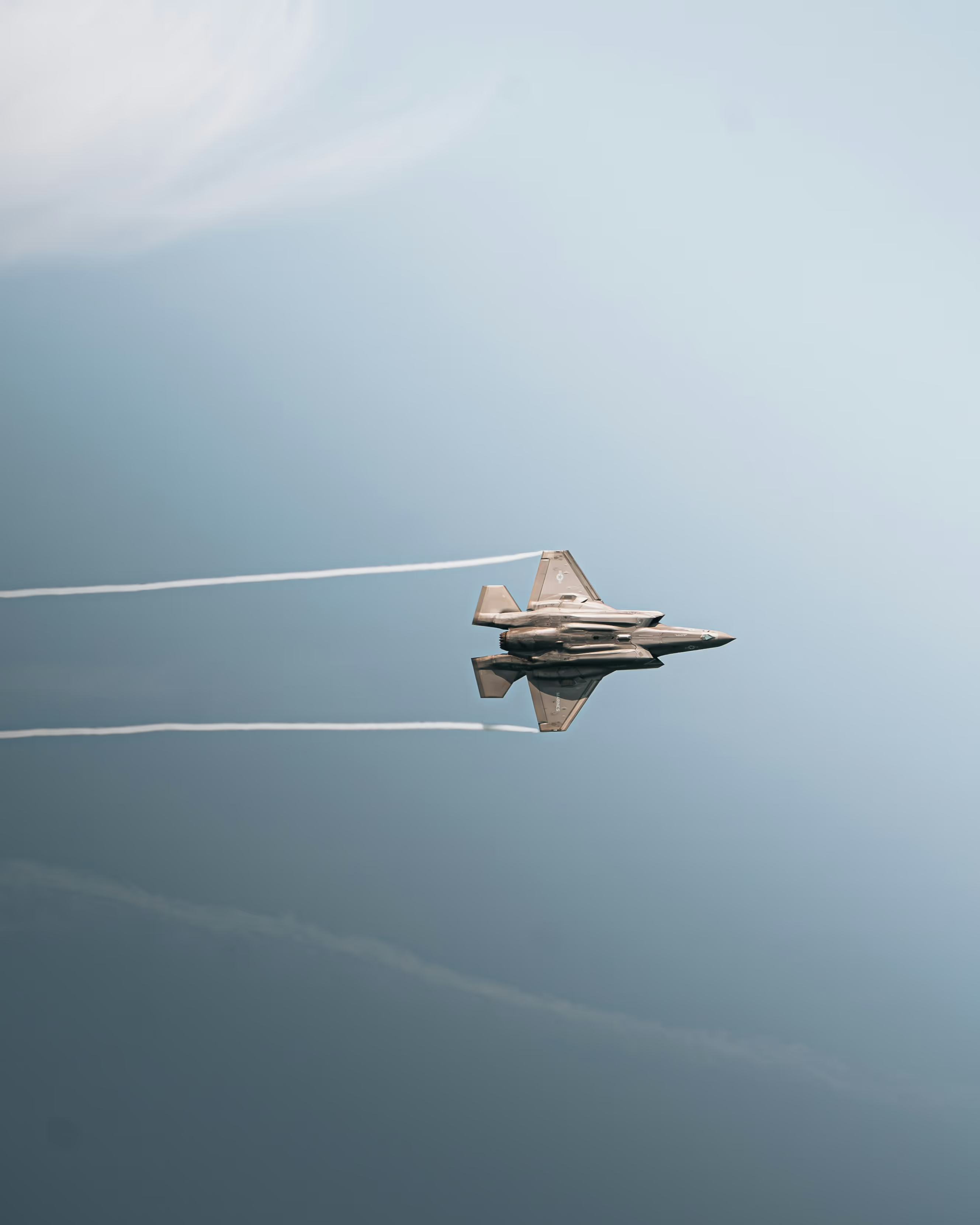
Surrogate models grounded in data and physics will accelerate the physical design-to-fly loop. Physics-based machine learning can reduce developmental flight test costs and timelines by an order of magnitude. What currently takes two years for CCA envelope expansion could be delivered in under four months. This compression means faster iteration, faster fielding, and the ability to design mission-specific platforms at scale. This is key to mass-producing optimized systems for specific missions, from electronic warfare to complex reconnaissance. We accelerate design optimization for first-time deployment and expedite flight tests by using simulated models.
The Milestone
We've validated T-38C envelope expansion using physics-informed Gaussian processes with 10x fewer sorties than traditional methods. We're replicating this on the F-16. Next step: parallel test program alongside CCA developmental test to achieve 10x acceleration using physics-informed digital twins and AI test agents.
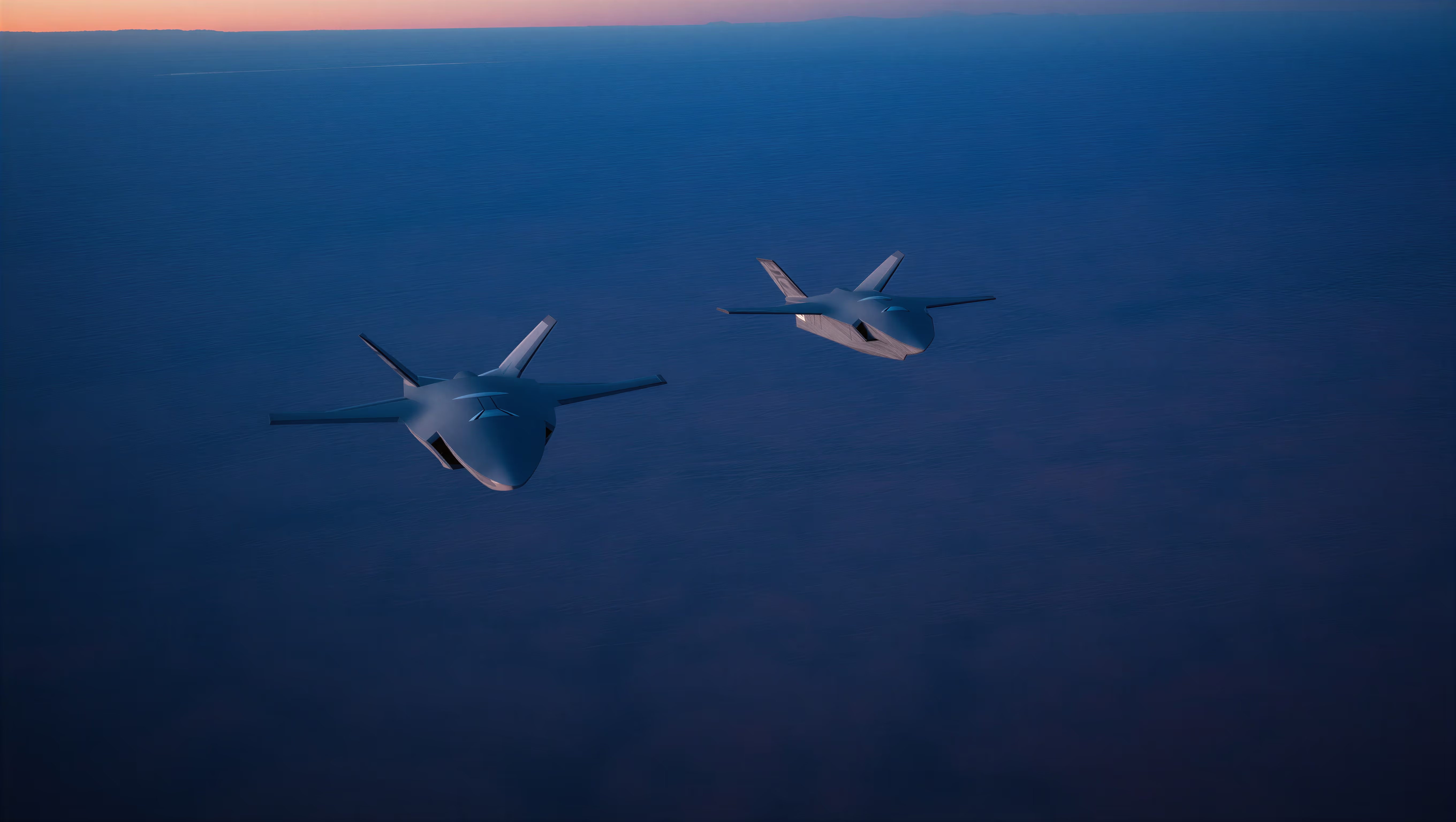
Calibrated Autonomy
56
Active AI Projects in Development
The Problem
Autonomous systems must operate in chaotic, contested environments (GPS-denied, communications-degraded) without saturating human operators. They need to understand commander's intent, execute complex missions, and adapt to threats in real time.
The Focus
Real operational environments are open-world, unstructured, and unpredictable. We are interested in frameworks that enable autonomous systems to perform within them, degrade gracefully at their limits, and accurately detect when those limits have been reached — from the subsystem to the system level — so that a single mission commander can supervise multiple autonomous systems with justified confidence.
The Milestone
We're integrating visual-inertial navigation for GPS-denied flight (targeting <1% drift error – a 6x improvement over baseline). We're developing decentralized multi-agent planning for swarm operations 100+ NM offshore. Target: TRL-6 demonstration in an over-water F2T2EA scenario by Summer 2027.
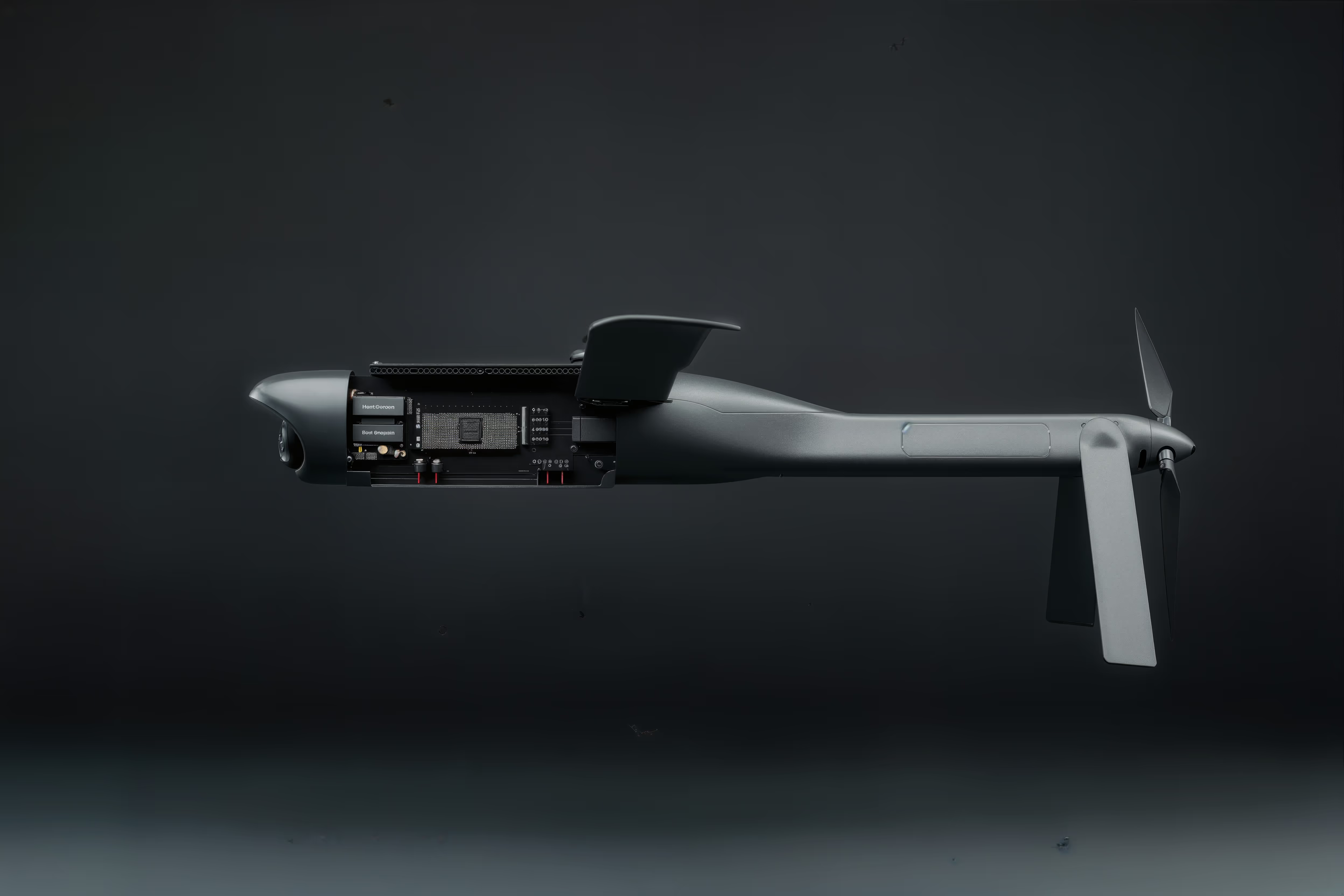
Efficient Computing for AI at the Edge
The Problem
Calibrated autonomy demands real-time inference and optimization — computationally expensive operations that today's resource-constrained edge hardware simply cannot support.
The Focus
We’re interested in techniques that span co-design of software and hardware to novel compute architectures. We aim to bring foundation model inference and, eventually, real-time optimization to SWaP-C-constrained platforms.
The Milestone
We’re actively seeking the right problem and partner to establish our first milestone. We want to prototype novel co-design and compute architectures on test aircraft.
Our research thrusts are focused on the desired ends, not the means. We don’t over-prescribe solutions or force researchers to fit narrow solicitations. At the same time, we aren't so abstract that operators can't see relevance.
Join the effort
If you read our technical pages and think "these people understand what I'm working on," we've done our job. If you read them and think "I have an idea that could fit here but isn't exactly this," even better: let’s have a conversation today.
Frequently Asked Questions
How do the three research topics interact?

Our thesis is built on a logical chain of dependencies: Mass demands Autonomy, and Autonomy demands Compute. 1. Simulation & Design for Mass allows us to create the "Mass" (the platforms) rapidly and at a lower cost. 2. Calibrated Autonomy provides the intelligence to manage that mass without saturating human operators. 3. Efficient Compute is the physical enabler that allows that intelligence to run on small, energy-constrained systems at the edge.
What do you mean by a “First-Principles” approach to defense problems?
We don't start with existing procurement requirements; we start with the problem's logic and physics. We ask: What is the minimum technical capability required to achieve this specific operational effect? By stripping away legacy DoD jargon and focusing on the core science, we identify more elegant, scalable solutions that others miss.
Is The AI Studio’s research limited to small Unmanned Aerial Systems (UAS)?
No. While autonomous flight is a convenient and high-impact embodiment for our current work, our research is not inherently limited to a given platform. The principles of Calibrated Autonomy and Edge Compute are equally applicable to new types of aircraft, space assets, or even ground-based resource-constrained systems. The AI Studio builds the architecture, not just the vehicle.
How does “Simulation & Design for Mass” differ from traditional modeling?
Traditional modeling often follows design. We use simulation to drive design. By mitigating the design-to-fly loop in a high-fidelity virtual environment, we can optimize for first-shot deployment. This means the first time a physical system flies, it is already closer to its final, mission-ready configuration than a traditional prototype would be after a year of flight tests.
Why focus on “Compute at the Edge” instead of cloud-based AI?
In contested environments, connectivity is a luxury rather than a guarantee. For a system to be truly autonomous, it must have the on-board “brains” to make decisions in comms-denied or degraded environments. Our work in software-hardware co-design ensures that computationally expensive algorithms, like mini-LLMs, can run reliably on the frontline without a reach-back to a central server.
What is the “Theory of the Case” for Calibrated Autonomy?
Our theory is that autonomy is only useful if it is predictable and aligned with Commander’s Intent. We focus on trustworthy systems that can navigate obstacles and adversarial actions without constant human intervention, ensuring that the operator remains a decision-maker, not a remote pilot.
How do you measure ‘Technical Depth” in a proposal?
We look for clarity on the “how.” A good-faith technical proposal should challenge our assumptions and provide concrete perspectives on the math, the architecture, or the physics involved. We value a thoughtful, technically-led pitch from an engineer far more than a polished business development presentation.
Operators
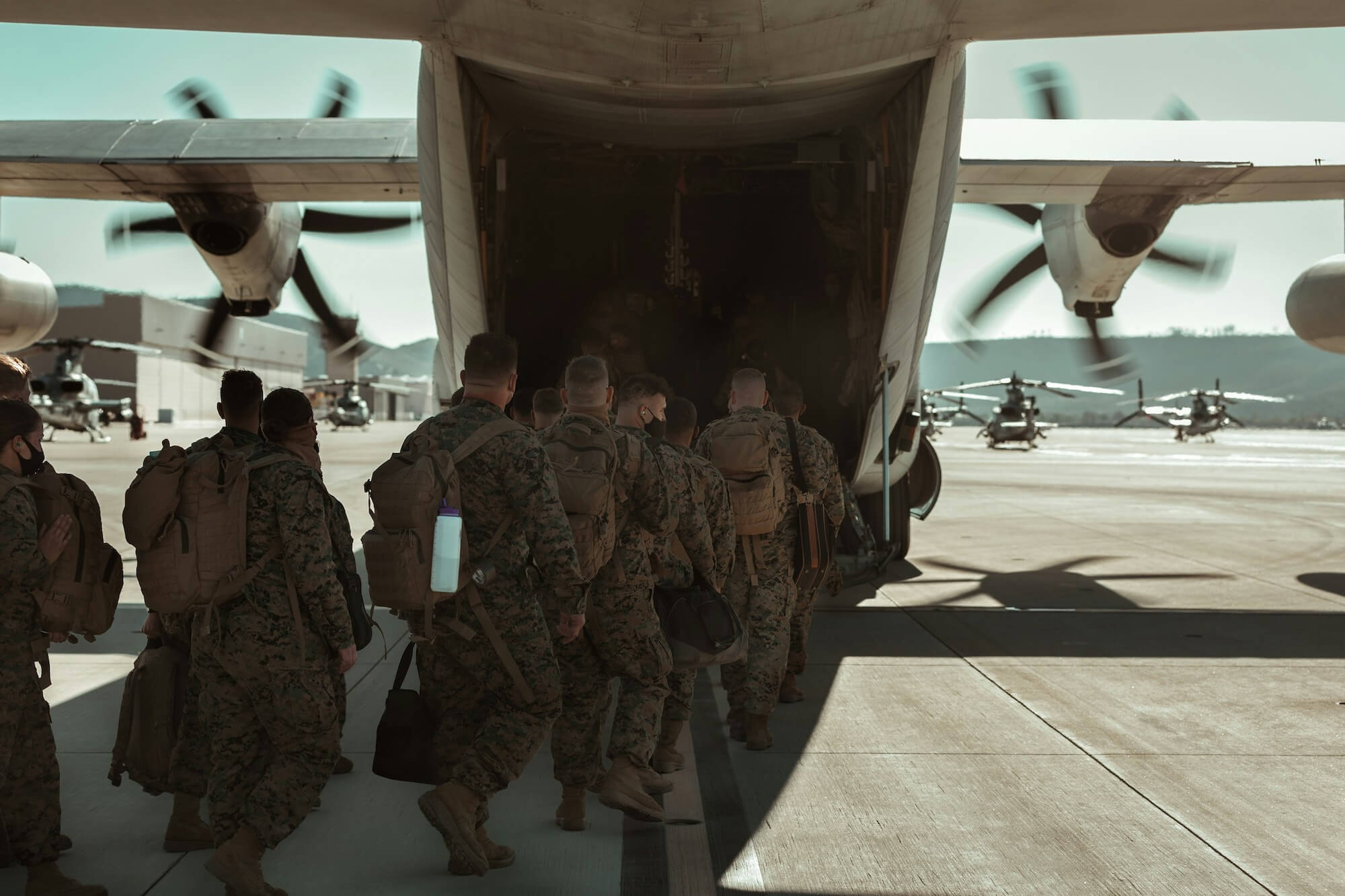
DAF-Stanford AI Studio exists to solve real operational problems alongside the people facing them. If you are encountering capability gaps at the edge and need autonomy that works under pressure, we are ready to partner with you. Our focus is to turn urgent field needs into deployable systems that directly strengthen the mission.

Academia
DAF-Stanford AI Studio exists to translate frontier research into real operational impact. If you are advancing new methods in autonomy, AI, or simulation and want to see that work tested in high-stakes environments, we are ready to collaborate. Our goal is to move promising ideas from the lab into systems that matter.
Industry
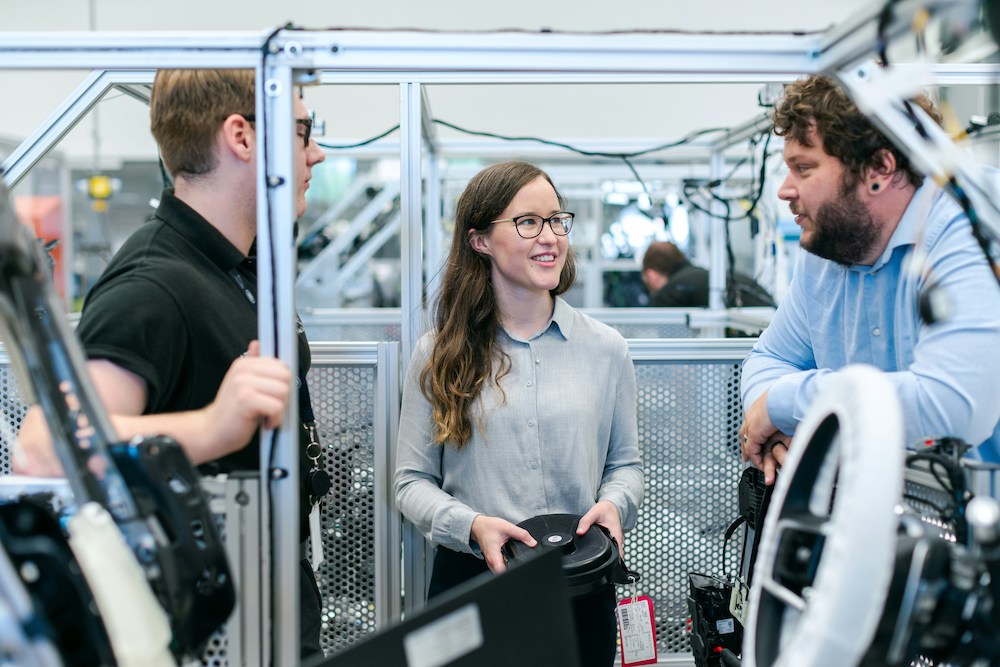
DAF-Stanford AI Studio exists to build deployable autonomy with people who solve hard technical problems. If you are developing AI systems that must perform under real-world constraints — power limits, contested environments, imperfect data — we are ready to work alongside you and turn that capability into operational systems.